
熊猫tv
未来医院将没有围墙?联影智能“元医院”战略发布 落地还须严守三道关_我的网站

一 | 《科创板日报》7月20日讯(记者 史士云)“你好,小U,请帮我展示患者张建国(虚拟患者)的检查结果。

二 |
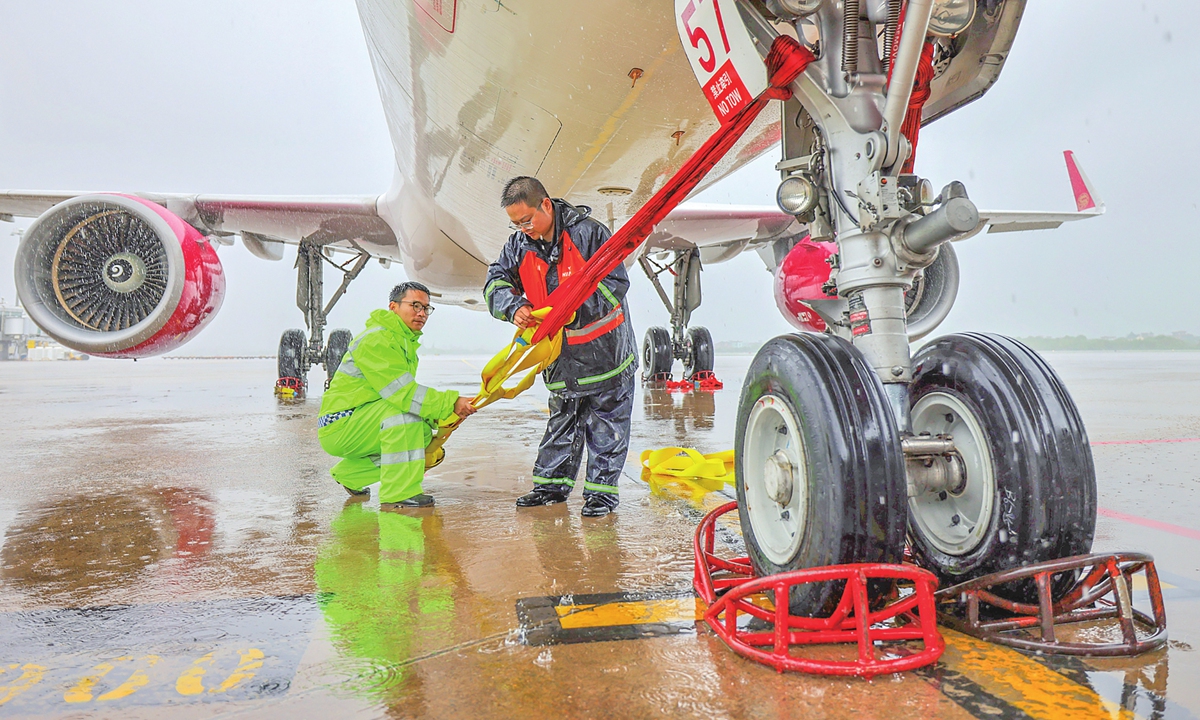
Typhoon Dolphin made landfall in Taizhou, East China's Zhejiang Province, on Sunday afternoon, bringing strong winds up to 42 meters per second and heavy torrential rain to the coastal regions amid a red alert - the highest level in the country's typhoon warning system - issued for it earlier that day.
Authorities in East China's Fujian have relocated nearly 100,000 residents, while coastal provinces are suspending railway services and canceled flights, making an all-out effort to mitigate possible risks.
The NMC maintained orange rainstorm and blue severe convective weather alerts at 6 am on Sunday, forecasting exceptionally heavy rainfall of 250 to 440 millimeters in some areas along the eastern coast of Zhejiang, with heavy to torrential rains expected across Jiangsu, Zhejiang, Shanghai, and Anhui between Sunday morning and Monday morning, China Central Television (CCTV) reported.
In response to the typhoon, China's meteorological authority on Sunday upgraded its emergency response for severe meteorological disasters from Level III to Level II.
Fujian raised the emergency response level for typhoon prevention to Level II at 9 am on Sunday.
As Typhoon Dolphin gathers strength and approaches the coastal areas, Fujian's flood control authority, as of 6 pm on Saturday, deployed a total of 17,800 officials to and relocated 98,900 people from high-risk areas, Xinhua News Agency reported on Saturday.
Fujian has suspended all 115 marine engineering projects and moved 290 construction vessels to safe waters, while 55 passenger ferry routes in affected waters have been halted, chinanews.com reported.
Meanwhile, railway services in the affected regions including Fujian, Zhejiang, Shanghai have also been suspended from Sunday to Monday, according to chinanews.com.
Fujian authorities have urged stronger safety measures for returning vessels, offshore platforms and coastal and island tourism, as well as reinforcement of aquaculture facilities. They also called for timely evacuations from flood- and landslide-prone areas to guard against secondary disasters from the typhoon and heavy rain, chinanews.com reported.
In Zhejiang, Wenzhou city has closed all 85 A-level national tourist attractions, turned away more than 7,400 visitors and evacuated over 1,600, with the relocation effort ongoing, according to CCTV. Next, Wenzhou will next implement a "five suspensions" policy, halting outdoor group activities, classes, work, business operations and transportation.
All fishing vessels at Shitang Fishing Port in Wenling, Zhejiang, have returned to port, with all personnel evacuated ashore and maritime rescue teams on standby. Authorities urged vessels to stay off the sea during the typhoon.
In Shanghai, Pudong and Hongqiao airports operated at reduced capacity on Sunday, with nearly 60 percent of flights canceled. A total of 1,384 flights are scheduled to be canceled including 871 at Pudong and 513 at Hongqiao. Passengers are advised to check with their airlines for the latest updates and adjust travel plans accordingly, according to CCTV.
According to Hu Xiao, meteorological analyst at the NMC, the typhoon has several notable features, including its strong intensity and expansive circulation. The typhoon also has several unusual features. Forming unusually far east, near 180°E, it has traveled more than 7,200 kilometers, making its potential landfall in China a rare event and possibly the easternmost such landfall since 1951. Its 12-day lifespan is also well above the typical seven-to-10-day average, CCTV reported.
According to Ma Jun, director of the Institute of Public and Environmental Affairs, Typhoon Dolphin traveled a long distance and remained at typhoon or severe typhoon strength of its lifespan so far. Despite passing through some areas that were unfavorable to its development, its powerful inner core remained intact, while its extensive cloud system continued to absorb moisture and energy, fueling the potential for torrential rainfall.
The typhoon has remained at sea for more than 260 hours and experienced a rare "three rises and three falls" in intensity. Its unusually long lifespan has allowed it to absorb more moisture and energy, while repeated intensity fluctuations have complicated forecasts of its future track and intensity of wind and rainfall, according to CCTV.
After landfall, Typhoon Dolphin may move slowly, prolonging heavy rainfall and raising the risk of extreme precipitation and related disasters. Its track later in the week remains uncertain as it could interact with the southwest monsoon and cold air from the northwest, potentially broadening and intensifying its impacts, Ma told the Global Times on Sunday.
。” “好的,该患者存在肝功能、凝血功能,肿瘤指标异常,7月18日已经完成最新一次腹部CT检查。

三 | ” “小U,请帮我做一份手术规划。” “依据CNLC分期标准,本例患者肝细胞癌分期为IA期,Child-Pugh分级A级,PS 评分为0分。手术智能体已自动完成肝脏三维重建,实现肝内动静脉、胆道系统精准辨识及残肝体积定量测算,并形成两套手术方案……” 上述对话,不是好莱坞电影《钢铁侠》中呼唤“贾维斯”的科幻场景,而是人类医生组队“元医生”,化身为“超级医生”开展日常临床工作的具象化呈现。 未来,如果医院不再局限于只是承载诊疗服务的实体空间,转而演变为联通医师、患者、医疗设备与各类医疗资源的智能能力网络,医院的边界又将归于何处? ▌打破传统医疗物理边界 自医院诞生以来,其服务形态主要依托物理空间展开:患者走进医院,医生依托专业设备、临床经验完成疾病诊疗,医疗能力也主要汇聚于这一物理空间之中。 但随着AI、多模态大模型、医疗智能体等技术快速发展,医院的边界正在被重新定义:未来,医院或将不再偏安于一栋建筑之内,医疗服务能力也将打破空间桎梏,以更多元的形态触达广大患者。 在日前举行的2026年世界人工智能大会(WAIC)期间,联影智能正式发布“元医院战略”。 联影智能将“元医院”定义为:通过多模态大模型、医疗智能体、数智孪生等‘元技术’升维医院能力,让医疗服务超越物理边界,从而成为解决医疗三难困境的全院级、数智化医院运营新模式。更为通俗地讲,元医院并不是一个AI产品,而是一套持续生成、持续学习、持续调度医疗能力的系统。 在元医院模式下,医生经验能够通过AI持续沉淀与进化成可复制的智能体应用,中枢型医疗智能体协同完成繁杂的诊疗流程;患者借助医疗级可穿戴设备实现持续监测、主动预警和及时干预;医疗服务也将从“有病才治疗”走向“全生命周期主动健康管理”。 “我们把‘元’定义为一种超越——让物理医院的能力在数智空间中不断拓展、增强和升维。

四 | ”联影智能联席CEO周翔表示,“元医院所要突破的,是传统医院长期受到时间、空间、人力和资源条件限制的发展瓶颈。医院和医生始终是医疗服务的主体,我们不造医院,也不颠覆医生,而是让他们拥有更强大的数智能力。在这一模式下,医疗服务不再完全依赖‘人在医院’,而是可以延伸至院外与日常生活场景。” 另据《科创板日报》记者获悉,“元医生”作为元医院中的中枢智能体,承担统筹全院智能化诊疗运转的关键作用。该智能中枢覆盖医院全业务流程,可精准识别临床诊疗诉求,自主整合调配各类医疗资源,统筹调度多类细分AI智能体协同作业。其核心能力主要展现在以下方面: 认知能力,即“超级大脑”:依托元智多模态大模型与动态更新医疗知识库,深度对接院内各业务系统,达成全域数据实时互通,具备资深临床专家级别的复杂诊疗逻辑解析能力; 调度能力,即“神眼千手”:可依据医护人员临床指令,统一调配院内智能工具库、细分智能体,联动各类医疗设备与手术机器人协同工作; 执行能力,即“行动闭环”:依托具身智能与各类医疗硬件互联互通,将智能认知、诊疗决策落地为诊断、检验、手术、护理等完整实操任务,形成诊疗全流程闭环。

五 | 在整个过程中,医生无需在多个系统之间反复切换,也无需耗费大量时间进行信息检索和数据整理。这些繁琐的数据处理、知识调用和流程协同,全部由元医生负责完成,临床医生则能够更加专注于患者沟通、临床判断和治疗决策。 不过,有行业人士指出,元医院规模化落地还需严守“三道关”:首先是合规关,要保证符合现行政策规范落地医疗伦理管控与医疗安全合规相关要求;其次是专业关,元医院与元医生要规避漏诊、误诊以及模型幻觉等各类问题,整体保障诊疗安全;最后为执行关,当下医疗智能体、具身智能技术持续迭代,未来院内各类设备和全流程诊疗环节都将深度智能化,因此需持续强化智能体与实体医疗设备的联动协同水平与实操落地能力。

六 | ▌医疗AI规模化落地仍存短板 过去十年,AI在医疗机构落地应用进程在持续提速。

七 | 各类单一场景AI工具陆续走进影像阅片、检验判读、手术辅助、病案管理等细分环节,通过技术赋能提升诊疗效率。但这些创新大多仍围绕现有医疗体系展开,更多是在既有流程上做"加法"。 如何让人工智能真正融入医疗业务流程,解决临床实际需求,释放更大的医疗价值,成为行业下一阶段需要探索的重要方向。 在“元医院战略”发布现场,中国科学院院士、浙江大学医学院附属邵逸夫医院院长蔡秀军表示,对于人工智能医疗应用,既要保持发展信心,也要保持理性认知。 “当前医疗AI仍处于持续发展阶段,距离高水平、高通用性的智能系统还有一定距离。

八 | 人工智能的发展不是替代医生,而是赋能医生,未来医学人才培养仍然不可或缺。

九 | ”蔡秀军说道。 同时,产业端与医疗机构需求端存在供需脱节问题。医疗机构虽存在大量智能化改造需求,但院内兼具AI应用能力的专业人员储备不足。部分医疗科技企业深耕技术研发,却难立足临床工作中的难点和堵点深入挖掘落地场景。 此外,复合型专业人才的供给不足和底层原创研发能力的薄弱也同样制约着AI在医疗领域的有效落地。 多重现实短板共同构成当前医疗AI规模化推广的发展桎梏,这也决定了医疗AI产业并非单点工具的简单迭代,而是需要完整技术链条、深度临床融合与长期研发投入支撑的系统性赛道。

十 | 在此行业现状之下,资本市场也逐步梳理出具备长期成长潜力的核心投资主线。 易方达资本投委会委员、医疗健康投资部总经理王昊指出,医疗垂直领域大模型和多模态、全流程的智能体,AI原生的医疗信息系统,以及AI原生的医疗硬件与设备是未来医疗AI的主要投资方向。 “过往市场普遍认为医疗AI落地门槛高,缺乏成熟的商业模式,相关企业盈利难度较大,但较高的行业壁垒反而构筑了难以复刻的长期核心价值。未来仅提供单一AI工具的企业发展空间会越来越难,只有像联影这类具备完整临床场景、过硬合规实力、规模化临床落地基础,且可搭建和整合全产业链生态的平台型企业,才能穿越行业周期,引领产业变革。” 王昊认为。 (科创板日报记者 史士云)。
Current article:http://g2yeru6.liangkuataosanxuanmiancen.sbs/u2le/iuoyb7m.html
Published on:20:42:03